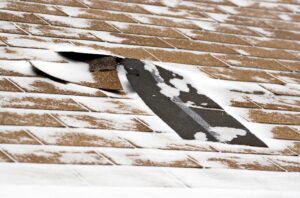
Winter in Asheboro doesn’t always make the evening news. You’re not dealing with the blizzards of the northeast or the ice storms that shut down entire cities. But Randolph County winters have their own quiet way of working on a roof — and by the time spring shows up and the dogwoods are blooming, the damage is already done. It’s just waiting to be found.
The problem with winter roof damage is that most of it isn’t visible from your driveway. It’s in the flashing that shifted a quarter inch during a freeze. It’s in the shingles that lost their seal bond during a cold snap and got lifted by a January wind. It’s in the granules sitting at the bottom of your gutters and the dark streak starting to form along your north-facing slope. None of that announces itself. It just quietly shortens the life of your roof, month by month, until one spring rainstorm makes the whole situation very expensive very fast.
Key Takeaways
- Asheboro’s winter weather — freeze-thaw cycles, ice, wind, and cold rain — creates specific and predictable roof damage patterns.
- Most winter roof damage is not visible from the ground and requires a close inspection to detect.
- Catching damage early in spring is the difference between a minor roof repair and a major roof replacement.
- Common warning signs include lifted shingles, granule loss, damaged flashing, ice dam residue, and interior water stains.
- A professional post-winter roof inspection is one of the highest-return maintenance investments a homeowner can make.
How does winter weather in Asheboro specifically affect a residential roof?
Randolph County’s freeze-thaw cycles, wind events, and cold moisture create a combination of stressors that compound over the season.
Asheboro sits in the Piedmont region of North Carolina, which means winters that fluctuate. You might get a week in the 60s followed by a hard freeze and a night of sleet. Temperatures cross the freezing mark repeatedly throughout the season, and that cycling is actually harder on roofing materials than a sustained cold snap would be.
Here’s why that matters. When water gets into a small crack in a shingle, a tiny gap in flashing, or a compromised sealant line, and then freezes, it expands. That expansion widens the gap. When it thaws, the gap doesn’t always close back to where it was. Repeat that process ten or fifteen times over a single winter and what started as a hairline issue becomes a legitimate vulnerability. Add wind events on top of that — and Asheboro gets its share — and you’ve got a roof that ends the season meaningfully weaker than it started.
What are the most visible signs that winter damaged your roof?
Lifted shingles, missing granules, and separated flashing are the three things most likely to show up after a Piedmont winter.
Some damage is detectable from the ground with a pair of binoculars and a few minutes of focused attention. You don’t have to get on the roof to spot the early warning signs — and frankly, you shouldn’t unless you know what you’re doing up there.
Here’s what to look for from ground level and during a close inspection:
- Lifted or curled shingle edges, particularly on the windward sides of the roof and along the ridge line where exposure is highest.
- Missing shingles that left bare decking exposed, even briefly, to rain and ice.
- Dark streaking or discoloration on north-facing slopes where moss and algae establish fastest after a wet winter.
- Granules accumulating in gutters or at downspout outlets — a sign that shingles took a beating and are shedding their protective surface layer.
- Sagging or detached gutters that pulled away from the fascia under ice weight or debris load.
- Flashing that has visibly separated, bent, or lifted at chimney bases, pipe boots, skylight perimeters, or roof-to-wall transitions.
- Soft or spongy areas along the roof deck edge that suggest moisture has penetrated the sheathing beneath.
Any one of these is worth following up on. More than one showing up together tells you winter did real work on your roof and it’s time for a proper inspection.
What interior signs suggest that winter created a roof leak?
Water stains on ceilings and walls, attic moisture, and musty odors are the inside story of outside damage.
Sometimes the roof tells its story from the inside out. Before you ever climb up to inspect the exterior, a walk through your attic and a close look at your upper-floor ceilings can tell you whether water found a way in during the winter months.
In the attic, you’re looking for daylight coming through the decking, wet or compressed insulation, dark staining on the rafters or sheathing, and any evidence of mold or mildew starting to form. Attic mold after a wet winter is a sign that either the roof allowed moisture in or ventilation isn’t doing its job — and often both problems are present at the same time.
On interior ceilings and walls, look for discoloration that follows a water path — the stain may not be directly below the point of entry since water travels along rafters and sheathing before dripping down. A brown ring on a ceiling, paint that’s bubbling or peeling near an exterior wall, or drywall that feels soft are all signs that moisture made it inside at some point this winter. Don’t assume the stain is old until you’ve confirmed the source is resolved.

How do ice dams form and what damage do they leave behind in the spring?
Ice dams form when heat escapes through the roof unevenly, and the damage they cause often doesn’t show up until well after the ice is gone.
Ice dams are one of the sneakier winter roof problems because the evidence of their damage often outlasts the ice itself by weeks or months. An ice dam forms when heat escaping through the upper portion of the roof melts snow, which runs down to the cold eaves and refreezes. That ice builds up, backs water under the shingles, and gives it a direct path into the roof assembly and the home below.
Asheboro doesn’t see ice dams as frequently as northern climates, but they absolutely happen here during extended cold spells, and when they do, they do damage. Signs that your roof experienced ice dam activity this past winter include water stains along exterior walls near the roofline, damaged or missing shingles at the eave edge, and interior staining on the ceiling directly inside the exterior wall. If your gutters took on significant weight during a cold stretch and then pulled away from the fascia, ice loading is likely the cause.
The fix for ice dams isn’t just repairing the visible damage — it’s also addressing the attic insulation and ventilation that allowed them to form in the first place. A contractor who only patches the shingle and ignores the underlying cause is setting you up for the same problem next winter.

What should you do if you suspect winter damaged your roof?
Start with a professional inspection, document what you find, and act before the spring storm season arrives.
The worst thing you can do after a rough winter is wait and see. Every week that passes between winter damage and repair is a week that moisture is doing its quiet work inside your roof assembly. By the time a leak shows up on your ceiling, it’s been traveling through insulation and framing for a while.
The right sequence looks like this. Get a professional inspection from a licensed roofing contractor who will actually walk the roof, check the flashing details, look in the attic, and give you a written assessment of what they find. Don’t rely on a drive-by quote or a contractor who offers a free inspection while pushing a sale. You want honest eyes on the actual condition of the roof.
If the damage appears to have been caused by a weather event — wind, ice, hail — contact your homeowner’s insurance carrier and open a claim before any repairs are made. An insurance adjuster will want to see the damage in its original state, and repairs made before the claim is documented can complicate your coverage. A reputable contractor will work with your insurance process rather than around it.
Straight Answers for Asheboro Homeowners
How do I know if my roof damage is covered by homeowner’s insurance?
Most standard homeowner’s policies cover sudden and accidental damage caused by wind, hail, falling trees, and ice. What they typically don’t cover is damage caused by normal wear, lack of maintenance, or age-related deterioration. The distinction matters, and it’s not always obvious which category your damage falls into. A roofing contractor who is experienced with insurance claims can help you understand what’s likely to be covered and how to document it properly.
How long does a post-winter roof inspection typically take?
For an average residential home, a thorough inspection by an experienced roofing contractor takes between 45 minutes and an hour and a half. That includes walking the roof surface, checking all penetrations and flashing details, inspecting the gutters, and a quick look in the attic if access allows. Anything significantly shorter than that is probably not thorough enough to catch the subtle damage that matters.
Is it safe to walk on my roof to inspect it myself?
It can be, under the right conditions — dry weather, proper footwear, a stable ladder, and a spotter on the ground. But most homeowners aren’t used to reading what they see on a roof surface, which means they often miss the things that matter most. A professional knows what lifted flashing looks like versus normal shadow, what granule loss pattern signals accelerated aging, and how to identify a soft spot that points to decking damage beneath. The inspection is most valuable when it’s done by someone who knows what they’re looking for.
What’s the typical cost of repairs for common winter roof damage in North Carolina?
Minor repairs — sealing lifted shingles, re-securing flashing, patching a small area of sheathing — often run a few hundred to a few thousand dollars depending on scope and access. More involved repairs involving multiple damaged areas, ice dam remediation, or decking replacement can run higher. The earlier the damage is caught, the lower the repair cost almost always is.
Don’t Let Last Winter’s Damage Become This Summer’s Crisis.
Here’s the straight truth about roof maintenance: the homeowners who come out ahead financially are the ones who stay ahead of problems rather than reacting to them. A post-winter inspection costs a fraction of what a mid-summer emergency repair costs, and it costs a fraction of a fraction of what interior water damage and early roof replacement cost. The math on proactive maintenance isn’t complicated.
If you’re in Asheboro, NC or anywhere across North Carolina and you want an honest assessment of what winter did to your roof — no pressure, no inflated damage reports, just a real look from people who know what they’re doing — reach out to Red Wolf Roofing. Their team understands Piedmont winters, knows the damage patterns they create, and will give you a clear picture of where your roof stands and what it needs.
Contact Red Wolf Roofing today and let’s find out what winter left behind before the next storm rolls through.