There’s something about spring in Greensboro that makes people want to get things done. The weather breaks, the days get longer, and suddenly that list of home maintenance tasks that sat ignored all winter starts looking a lot more manageable. If you’re going to do one thing on that list this spring — one single thing that delivers more protection per dollar than almost anything else you could spend money on — make it a roof inspection.
Not because something is necessarily wrong. Because something might be, and you’d rather find out now than in the middle of a July thunderstorm when the ceiling starts dripping and the repair options get expensive fast. Greensboro’s winters are mild by northern standards, but they’re not gentle on roofs. And the storm season that follows? That’s where deferred maintenance turns into real damage. Spring is the window between those two chapters, and it’s exactly the right time to look.
Key Takeaways
- Spring gives homeowners a clear view of winter damage before Greensboro’s active storm season begins.
- Roof inspections catch small problems — lifted shingles, cracked flashing, clogged drainage — before they become large, expensive ones.
- Guilford County’s climate creates specific seasonal stress patterns that make post-winter inspection especially valuable.
- Most roof problems are invisible from the ground and require a trained eye to identify before they cause interior damage.
- Scheduling a spring inspection now means you have time to plan and budget for any repairs before summer heat and storms arrive.
Why is spring specifically the right time for a roof inspection in Greensboro?
Spring sits in a critical window between winter damage and summer storm season — making it the most strategic time to assess your roof’s condition.
Timing matters in roofing the same way it matters in most things worth doing right. A fall inspection makes sense too, but spring has a specific logic that’s hard to argue with. Winter just finished doing whatever it did to your roof — and in Greensboro, that means months of temperature swings, wind events, cold rain, and the occasional ice or sleet that stresses materials in ways that don’t always show up immediately.
Spring inspection catches that damage while you still have comfortable weather to work in, contractor availability before the summer rush hits, and enough time to schedule and complete roof repairs before Greensboro’s storm season peaks. In Guilford County, serious thunderstorm activity typically ramps up in late spring and runs through summer. Those storms bring wind, hail, and heavy rain — and a roof that’s already compromised from winter is going to lose that fight faster than one that’s been checked and repaired.
The homeowners who get caught off guard aren’t the ones who had bad luck. They’re usually the ones who skipped the window when they could have seen what was coming.
What does Greensboro’s winter actually do to a residential roof?
Piedmont winters deliver freeze-thaw cycles, wind, and moisture that create slow, cumulative damage most homeowners never see coming.
Greensboro sits in North Carolina’s Piedmont, which means winters that don’t commit to being cold — they fluctuate. A week of 55-degree days followed by a hard freeze followed by rain followed by another cold snap. That cycling is genuinely hard on roofing materials because it never gives anything a chance to stabilize.
Water that works its way into a small gap in flashing or a micro-crack in a sealant line freezes, expands, and widens that gap. When it thaws, the gap stays wider than it was. That process repeating over an entire season is what turns a minor seam issue into a legitimate leak path. Shingle adhesive strips that soften in warm weather and re-seal can fail to bond properly in fluctuating temperatures, leaving shingles that look fine from the ground but have lost their wind resistance.
Add to that the wind events Greensboro sees in winter — cold fronts pushing through, occasional strong gusts from the northwest — and you’ve got a season that quietly accumulates damage across an entire roof surface. Most of that damage isn’t dramatic. It’s subtle. And subtle damage is exactly what a trained inspection is designed to find.
What do roofing contractors actually look for during a spring inspection?
A thorough spring inspection covers the roof surface, all penetrations and transitions, the drainage system, and the attic below.
This is worth understanding because not all inspections are equal. A contractor who walks the perimeter and glances upward is not doing you a service. A real inspection is systematic and covers every component of the roofing system, not just the shingles.
Here’s what a quality spring roof inspection should include:
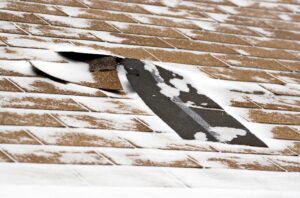
- The full roof surface, checking for lifted, curled, cracked, or missing shingles and identifying areas of accelerated granule loss.
- All flashing details — chimney, pipe boots, skylights, valleys, and roof-to-wall transitions — where separation and cracking are most common after winter.
- The ridge line and hip caps, which take direct wind exposure and are often the first areas to show damage.
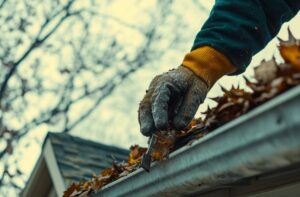
- Gutters and downspouts, checking for proper slope, secure attachment, blockages, and fascia condition behind the gutter.
- Soffit and fascia condition, particularly in areas where gutters may have held water against the wood through the wet months.
- Attic inspection for daylight through the decking, proper ventilation airflow, moisture or staining on rafters and sheathing, and insulation condition.
- Any rooftop equipment — HVAC units, vents, satellite mounts — where foot traffic or mechanical vibration may have disturbed the membrane or flashing below.
A written report with photos is the standard you should expect. If a contractor can’t tell you specifically what they found and show you where, the inspection wasn’t thorough enough to be useful.

How does Greensboro’s spring storm season make pre-season inspection so important?
Guilford County’s storm season brings hail, wind, and heavy rain — and a weakened roof doesn’t survive it the same way a sound one does.
Greensboro is no stranger to serious spring weather. The city sits in a region that sees its share of severe thunderstorm activity, and in some years, hail events that cause significant roofing damage across entire neighborhoods in a single afternoon. A roof that enters storm season with compromised shingles, lifted flashing, or marginal seam adhesion is already starting the season behind.
The other thing worth understanding is that hail damage and wind damage from a storm are often insurance-covered events. But when an adjuster looks at a roof after a storm and finds damage that clearly predates the weather event — granule loss patterns consistent with years of wear, flashing that’s been failing for seasons — it complicates the claim. A pre-storm inspection establishes a documented baseline of your roof’s condition, which protects you both ways. You know what you have going in, and you have clear evidence of what any storm damage added to that picture.
That documentation isn’t just useful for insurance purposes. It’s useful for planning. Knowing that your roof has four or five good years left, or knowing that a section of flashing needs attention now, lets you make informed decisions rather than reactive ones.
What are the most commonly missed signs of roof damage that only show up in spring?
Some of winter’s most damaging effects are only visible once weather clears and a trained eye gets close enough to look.
There are damage types that are genuinely difficult to identify until conditions are right and someone who knows what they’re looking for gets on the roof. These aren’t things you’re going to spot from the driveway, and they’re not things that will announce themselves until they’ve gotten significantly worse.
The most commonly missed post-winter damage includes:
- Sealant cracking and shrinkage around pipe boots and flashing edges that looks intact from a distance but has microscopic gaps water can exploit.
- Shingle tabs that have lost adhesive bond and lay flat in calm conditions but lift in wind, admitting water with each gust.
- Valley liner damage where debris accumulation over winter has held moisture against the metal or membrane and accelerated deterioration.
- Fascia rot beginning behind gutters that held debris and ice against the wood through January and February.
- Attic condensation residue on rafters and sheathing that indicates ventilation was insufficient through the cold months and may have caused moisture accumulation inside the assembly.
Each of these is a small problem in spring. Each of them is a significantly larger problem by fall if left unaddressed.
Greensboro Roofing Questions, Answered Without the Runaround
How much does a professional roof inspection cost in Greensboro?
Many reputable roofing contractors offer inspections at no charge or for a modest fee that gets credited toward any work performed. What you’re really evaluating isn’t the cost of the inspection — it’s the quality and thoroughness of the contractor doing it. An inspection that takes 20 minutes and produces no documentation isn’t worth the free price tag. One that takes an hour, covers the whole system, and gives you a written report with photos is genuinely valuable regardless of what it costs.
How often should a Greensboro homeowner get a roof inspection?
Once a year is the professional standard, and spring is the ideal time to do it. Twice a year — spring and fall — is better if your roof is over 15 years old, if you have significant tree cover over the house, or if your home has experienced any weather events, falling branches, or other impacts since the last inspection.
What’s the difference between a roof inspection and a roof estimate?
A roof inspection is an assessment of the current condition of your roof — what’s working, what’s showing wear, and what needs attention. A roof estimate is a price for specific work. A good contractor will do a thorough inspection first and then provide an estimate only for what the roof actually needs. Be cautious of any contractor who shows up with an estimate before they’ve done a real inspection.
How long does a typical roof inspection take?
For a standard single-family home, a thorough inspection runs between 45 minutes and an hour and a half depending on roof complexity, square footage, and attic access. Larger or more complex roofs with multiple penetrations, steep pitch, or significant tree coverage may take longer. Rush inspections that come in well under that time frame rarely cover everything that matters.
Spring Doesn’t Wait. Neither Should Your Roof.
The window between winter and storm season is real, and it’s shorter than it feels when you’re standing in it. Every week that passes without a roof inspection is a week that undetected damage is sitting on your home, waiting for the next rain event to make itself known in the most inconvenient way possible.
If you’re in Greensboro, NC or anywhere across North Carolina and you’re ready to get a straight answer about the condition of your roof — from a team that will actually climb up, look carefully, and tell you what they find — reach out to Red Wolf Roofing. They know Piedmont roofs, they know what Guilford County winters do to them, and they’ll give you honest information you can actually use.
Contact Red Wolf Roofing today and let’s get eyes on your roof before storm season decides to do the inspection for you.