Most homeowners think about their roof in terms of what they can see — shingles, gutters, maybe a flashing seam or two. What almost nobody thinks about is what’s happening on the inside of that roof, specifically the pipes and ducts running up through it from your bathrooms and kitchen.
Those exhaust vents are doing an important job. Every shower you take, every pot of pasta you boil, every load of laundry that generates steam — all of that moisture has to go somewhere. When your ventilation system is working correctly, it exits cleanly through the roof and disappears into the open air. When it isn’t, that moisture stays inside your home’s structure, and your roof quietly starts paying the price.
In Apex and across the Triangle region, where warm, humid summers meet damp winters, a poorly vented exhaust system can do real damage before you ever notice a single symptom. Here’s what you need to know.
Key Takeaways:
- Bathroom and kitchen exhaust vents that terminate in your attic are a direct cause of moisture damage
- Improper vent installation is one of the most commonly overlooked sources of roof and attic problems
- North Carolina’s humid climate makes correct exhaust venting especially critical
- Signs of the problem often show up in your attic long before they reach your ceiling
- A professional roof inspection can identify venting issues before they become structural damage
What Are Exhaust Vents Actually Supposed to Do?
They exist to move moisture out of your home — completely out, not just out of sight.
When you run your bathroom exhaust fan, it pulls warm, humid air out of the room. That air travels through a duct — ideally a short, insulated one — and exits your home through a cap or vent on the roof or soffit. Same principle applies to your kitchen range hood, your dryer vent, and any other exhaust system in your home.
The key word there is exits. The air isn’t supposed to be redirected, slowed down, or dumped somewhere else inside your home’s building envelope. It’s supposed to leave. Completely.
When that system works as designed, moisture gets expelled efficiently and your home’s structure stays dry. When it doesn’t — whether because of a poor installation, a disconnected duct, or a design shortcut taken during construction — all of that warm, moisture-laden air ends up somewhere it was never meant to be.
What Happens When Exhaust Vents Are Routed Into the Attic?
It’s one of the most common installation mistakes — and one of the most damaging.
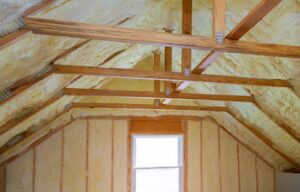
Here’s a scenario that plays out in homes across North Carolina more often than most people realize. A bathroom exhaust fan gets installed, the contractor runs the duct up into the attic, and instead of routing it all the way through to an exterior vent cap, it just… stops. The duct terminates inside the attic space, dumping humid air directly into what should be a dry, ventilated environment.
It seems like a minor shortcut. It isn’t. Over time, that continuous dump of warm, humid air into your attic causes:
- Condensation on the underside of your roof deck and rafters, leading to moisture saturation in the wood
- Mold and mildew growth on framing, sheathing, and insulation
- Wet, ineffective insulation that no longer does its job thermally or as a moisture barrier
- Accelerated deterioration of your roof decking, which can lead to soft spots, sagging, and eventually shingle failure
- Ice dams in winter, as the heat from improperly vented air warms the roof unevenly
According to the U.S. Department of Energy, bathroom fans and other exhaust equipment should always be vented to the outdoors — never into attics, crawl spaces, or wall cavities. It’s a basic building standard, but it gets ignored or cut short more often than it should.
The team at Red Wolf Roofing regularly finds attic moisture damage that traces directly back to exhaust vents that were never properly terminated to the exterior. It’s a fixable problem — but only once it’s been identified.
How Does This Affect the Roof Itself?
Once moisture gets into your roof system, it doesn’t stay in one place.
Your roof deck — the plywood or OSB sheathing that your shingles are nailed to — is the backbone of your entire roofing system. It needs to stay dry to maintain its structural integrity. When exhaust vents pump humid air into the attic year after year, that deck absorbs moisture, softens, and begins to degrade.
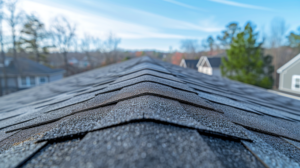
What does that look like in practice? Shingles that appear to be buckling or lifting even though they’re relatively new. Soft or spongy spots when you walk across the roof. Granule loss accelerating faster than normal. These are all symptoms of a roof deck that’s been compromised from underneath — and in most cases, the homeowner has no idea why.
The National Roofing Contractors Association consistently points to attic moisture as one of the leading contributors to premature roof failure. A roof that should last 25 years might need replacement in 15 if it’s been fighting chronic moisture exposure from below. That’s a significant financial hit — and one that’s almost entirely preventable.
If your roof is showing signs of premature wear, or if you’ve never had your attic venting situation professionally evaluated, a residential roofing inspection is worth scheduling sooner rather than later.
How Do You Know If Your Exhaust Vents Are the Problem?
Some signs are visible from inside your home. Others require a closer look.
You don’t necessarily need to climb into your attic to spot the early warning signs of an exhaust venting problem. Here’s what to watch for:
- Persistent musty smells in upper-floor rooms or near ceiling vents — often the first clue that something organic is growing where it shouldn’t be
- Bathroom ceilings that seem to stay damp or develop paint bubbles and peeling shortly after showers
- Visible moisture or condensation in your attic during cold weather inspections
- Dark staining on attic rafters or sheathing — a classic sign of chronic moisture exposure
- Insulation in your attic that looks compressed, discolored, or wet
If any of those sound familiar, the next step is getting a professional set of eyes on your attic and your exhaust ducting. What looks like a roofing problem on the surface is often a venting problem underneath, and treating the symptom without addressing the cause just delays the inevitable.

Straight Answers to Questions Homeowners Are Asking
“Can I check my own exhaust vent routing without calling a professional?”
You can do a basic check. Go into your attic on a cold morning and look for any ducts that appear to end without connecting to an exterior vent cap. Condensation or frost near duct ends is a telling sign. That said, assessing the full extent of any moisture damage that’s already occurred really does require professional evaluation.
“My home was built in the last ten years — can this still be an issue?”
Absolutely. Improper vent termination happens in new construction too, and it’s not always caught during inspection. Age of the home doesn’t guarantee correct installation.
“What’s the fix if my vents are terminated in the attic?”
The ducts need to be extended and properly routed to terminate outside — either through the roof with a weatherproof cap or through a soffit vent. It’s not a massive project, but it does need to be done correctly to be effective long-term.
“Will my homeowner’s insurance cover damage from improper venting?”
Generally not. Gradual moisture damage from installation deficiencies is typically considered a maintenance issue rather than a sudden, accidental loss. That’s another reason early detection matters so much.
Small Ducts, Big Consequences — Let’s Get This Right
A bathroom exhaust fan is one of the least glamorous things in your home. It’s easy to ignore, easy to forget, and easy to assume someone installed it correctly the first time. But when it’s routing moisture into your attic day after day, the consequences eventually show up somewhere you can’t ignore — your roof.
The good news is that this is a solvable problem. Catch it early, fix it properly, and your roof can do its job for as long as it was meant to.
Red Wolf Roofing proudly serves homeowners across Aberdeen, Cumberland County, Fayetteville, Harnett County, Hoke County, Hope Mills, Lee County, Moore County, Pinehurst, Raeford, Sanford, Seven Lakes, Southern Pines, West End, and Whispering Pines. We bring honest answers and quality craftsmanship to every inspection and repair we do — and we’d be glad to bring that same care to your home.
Learn more about the Red Wolf Roofing team, or go ahead and schedule your free estimate today. No pressure. Just real people doing real work.