You’ve seen them. Those dark streaks running down the slope of a roof like something spilled and nobody cleaned it up. Maybe it’s your neighbor’s house. Maybe, if you’re being honest, it’s yours. Either way, your first instinct is probably to chalk it up to dirt or weathering and move on.
Here’s the thing — those stains are trying to tell you something. And depending on what’s actually causing them, ignoring the message can cost you a lot more than a pressure wash.
In Southern Pines and across the Sandhills region, the combination of warm temperatures, pine tree shade, and high seasonal humidity creates ideal conditions for biological growth on roofs. Understanding what you’re actually looking at — and what it means for your roof’s health — is the difference between a simple fix and an expensive repair.
Key Takeaways:
- Dark roof stains are almost never just dirt — they’re usually algae, mildew, or mold
- Not all stains are equally serious, but none of them should be ignored
- North Carolina’s humid, shaded environment accelerates biological roof growth
- The difference between cosmetic and structural damage often comes down to how fast you act
- A professional inspection tells you exactly what you’re dealing with
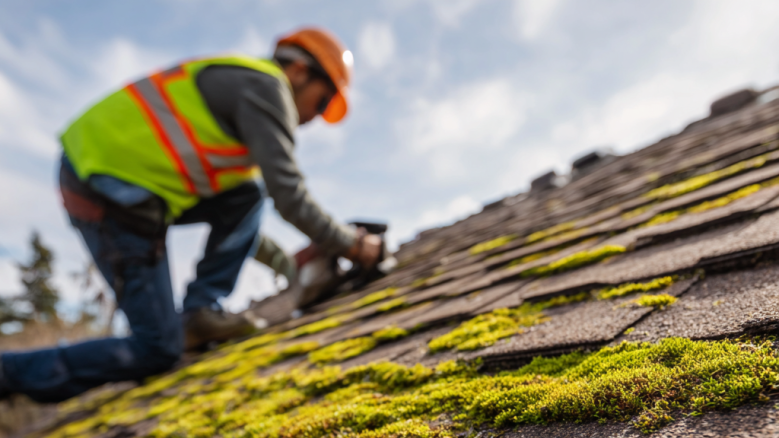
What Are Those Dark Stains on Your Roof, Really?
Most of the time, you’re looking at algae — but mold and mildew aren’t far behind.
The most common culprit behind those dark streaks and patches on roofs in Southern Pines is a type of algae called Gloeocapsa magma. It feeds on the limestone filler used in asphalt shingles, spreads through airborne spores, and leaves behind a dark, sooty-looking stain as it grows. It thrives in humid environments and loves the shade cast by the tall pines that make this region so beautiful.
Mildew is a surface-level fungal growth — flat, powdery, and usually gray or white. It doesn’t penetrate deep into materials and is generally the least damaging of the three. It’s still a sign that moisture is lingering on your roof longer than it should, but it’s the easiest to address.
Mold is a different story. It’s a fungal growth that can penetrate surfaces, and it tends to appear in darker, more irregular patches — green, black, or even orange depending on the species. When mold takes hold on a roof, it’s often a sign that moisture has been sitting long enough for something to be genuinely wrong with the underlying system.
Does It Actually Damage Your Roof, or Is It Just an Eyesore?
It starts cosmetic. It doesn’t stay that way.
This is where a lot of homeowners get caught off guard. The staining itself looks bad, but the real damage happens underneath and over time. Here’s how biological growth moves from an appearance problem to a structural one:
- Algae gradually degrades the protective granules on asphalt shingles. Those granules aren’t just decorative — they shield the asphalt from UV rays. Once they’re gone, shingles age faster, become brittle, and lose their weather resistance.
- Mildew indicates that moisture is consistently sitting on your roof surface. That persistent dampness accelerates wear on shingles and can work its way into seams and gaps over time.
- Mold can penetrate the roof deck itself if it’s been allowed to grow unchecked. Mold on the surface of your shingles is one level of concern. Mold in the sheathing beneath them is another level entirely — one that often requires more than just a cleaning to fix.
- Moss, which often accompanies these organisms in shaded environments, holds moisture directly against your shingles like a sponge. Over time, it works into the edges of shingles, lifting them and allowing water to seep underneath.
The Environmental Protection Agency notes that mold can begin to develop on organic materials within 24 to 48 hours of moisture exposure. On a roof where water is regularly sitting or trapped, that window can close quickly.
Why Are Southern Pines Roofs Especially Vulnerable?
The same things that make this area gorgeous also make roofs work harder.
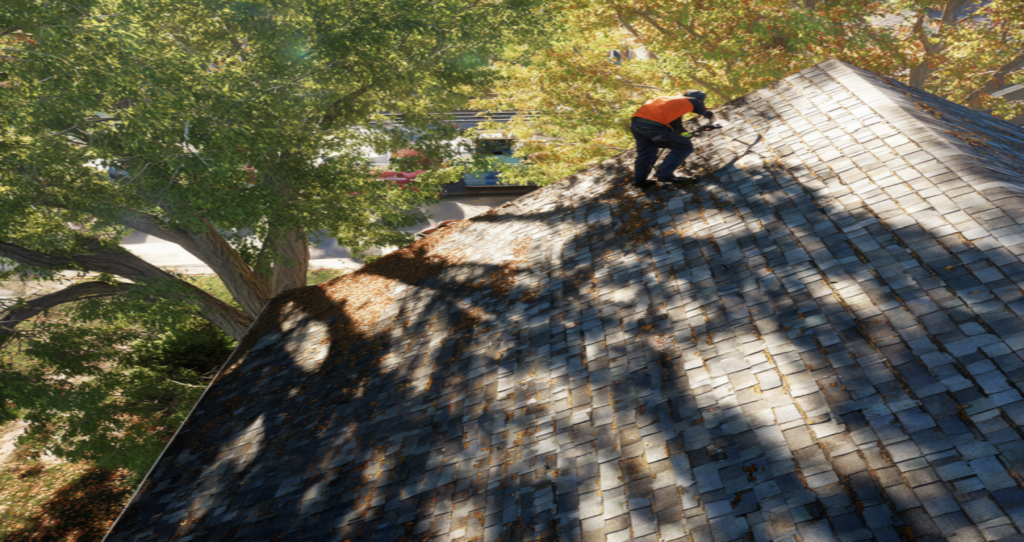
Southern Pines sits in a region that genuinely has it all — and from a roof’s perspective, not all of that is good news. The dense pine canopy that defines so much of the Sandhills landscape creates prolonged shade on rooftops. Shaded roofs stay damp longer after rain. They don’t get the UV exposure that naturally inhibits biological growth. And pine needles, when they accumulate in valleys and gutters, trap moisture and create the perfect breeding ground for algae and mold.
Layer on top of that the regional humidity — summers that regularly push above 80 percent relative humidity — and you’ve got a climate that actively encourages the growth of everything we just described. Homes here need more proactive roof care than homes in drier climates, full stop.
If your roof hasn’t been inspected in a few years, and especially if you have mature trees overhanging it, there’s a real chance that biological growth is already doing quiet damage. The CDC’s guidance on mold makes clear that early identification and remediation is always the better path — and that applies just as much to roofs as it does to interiors.
What Should You Actually Do About Roof Stains?
Start by knowing what you’re dealing with — then act accordingly.
The instinct a lot of homeowners have is to grab a pressure washer and blast the stains away. That’s understandable, but high-pressure washing can actually strip granules from asphalt shingles and do more harm than good. Here’s a more sensible approach:
Get a professional inspection first. Before you treat anything, you need to know whether you’re dealing with surface-level algae, mildew, or something that has already worked its way into your roof system. A professional eye makes that call accurately. The team at Red Wolf Roofing offers inspections that look at the full picture — not just the staining you can see, but the condition of the sheathing and structure underneath.
For surface algae and mildew, a low-pressure soft wash with an appropriate cleaning solution is usually effective. Many roofing contractors offer this as a service or can recommend a trusted provider.
For more advanced mold penetration or underlying moisture issues, you may be looking at targeted roof repair or in some cases a broader roof replacement if the damage has spread significantly. The sooner the situation is assessed, the more options you have.
Going forward, zinc or copper strips installed near the roof ridge can leach trace amounts of metal during rain events that naturally inhibit algae and moss growth. Trimming back overhanging branches to increase sun exposure and airflow also makes a meaningful difference.
Real Questions Homeowners Ask About Roof Stains
“Are the black streaks on my roof dangerous to my family?”
The algae causing most black streaking isn’t a direct health hazard outdoors, but it is damaging your roof. If mold has progressed into your attic space, that’s a different conversation — attic mold can affect indoor air quality and should be addressed promptly.
“Can I just paint over the stains or cover them up?”
No — and that approach would trap moisture and make things worse. Stains need to be cleaned and the underlying cause addressed, not covered.
“How do I know if the stains are new or have been there a long time?”
Older biological growth tends to be more widespread, darker, and may have visible moss or lichen alongside it. Newer growth is patchier and lighter. Either way, a professional inspection gives you a clear timeline and severity assessment.
“Will my homeowner’s insurance cover mold damage on my roof?”
It depends on your policy and the cause. Sudden damage from a storm event is more likely to be covered than long-term biological growth from deferred maintenance. Your best move is to document the condition and talk to your insurer after getting a professional assessment.
Don’t Let a Stain Become a Structure Problem
A dark streak on your roof is easy to ignore. It’s up high, it’s not leaking yet, and there are about a hundred other things competing for your attention on any given weekend. But that stain is working against your roof right now — quietly, steadily, and with zero concern for your schedule.
The homeowners who avoid expensive repairs aren’t lucky. They’re just the ones who acted before a surface problem became a structural one.
Red Wolf Roofing proudly serves homeowners across Aberdeen, Cumberland County, Fayetteville, Harnett County, Hoke County, Hope Mills, Lee County, Moore County, Pinehurst, Raeford, Sanford, Seven Lakes, Southern Pines, West End, and Whispering Pines. We bring honest assessments and quality work to every home we touch — and we’d love to bring it to yours.
Learn more about the Red Wolf Roofing team, or take the first step and schedule your free estimate today. No pressure — just real answers from people who know roofs.