Here’s something most people don’t think about until their energy bill arrives: the insulation in your roof isn’t just there to keep you warm in winter. It’s doing a full-time job every single day — managing heat, controlling moisture, and quietly determining how long your roof actually lasts.
In Asheboro and across central North Carolina, homes deal with a climate that doesn’t make that job easy. Hot, humid summers. Cold, damp winters. That back-and-forth puts real stress on your roof system, and the insulation inside it is either working with you or against you.
This guide will help you understand your options, ask the right questions, and make a decision that protects your home for years to come.
Key Takeaways:
- Roof insulation affects energy efficiency, moisture control, and roof longevity — not just comfort
- North Carolina’s mixed climate means insulation choice really matters
- There’s no single “best” option — the right choice depends on your home, your budget, and your goals
- A professional assessment takes the guesswork out of it entirely
Why Does Roof Insulation Matter So Much in the First Place?
Because your roof is fighting the elements on two fronts at once.
Most people think of insulation as a comfort thing. And sure, it helps keep your home warmer in January and cooler in August. But in North Carolina’s climate, roof insulation is doing a lot more than that.
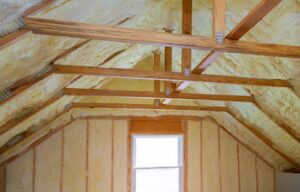
During summer, your attic can reach temperatures above 150 degrees Fahrenheit on a hot day. Without proper insulation, that heat radiates down into your living space and forces your HVAC system to work overtime. During winter, warm air from inside your home rises and tries to escape through the roof — taking your heating dollars with it.
Insulation is the barrier between those two worlds. When it’s right for your home, everything runs more efficiently. When it’s wrong — or just old and degraded — you feel it in your comfort levels and your monthly bills.
What Are the Main Types of Roof Insulation Available?
Each one has a job it does particularly well — and conditions where it falls short.
Understanding your options is the first step toward making a smart choice. Here’s a plain-language breakdown of what’s most commonly used in homes like yours:
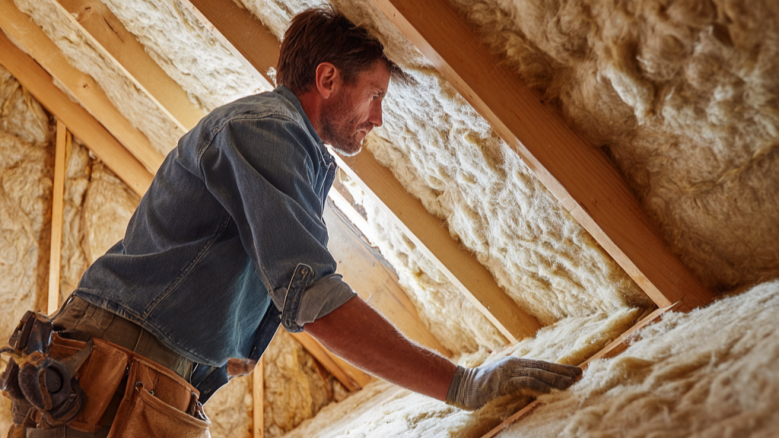
- Blown-in fiberglass or cellulose: Loose-fill insulation that gets blown into attic spaces. It’s affordable, widely available, and effective when installed to the right depth. Cellulose is made from recycled paper and is a solid eco-friendly option. The downside is that it can settle over time and lose some of its effectiveness.
- Batt insulation: The familiar pink rolls you’ve probably seen before. Easy to install in standard joist spacing, budget-friendly, and a decent performer in mild climates. It’s less ideal when there are irregular spaces or gaps to fill.
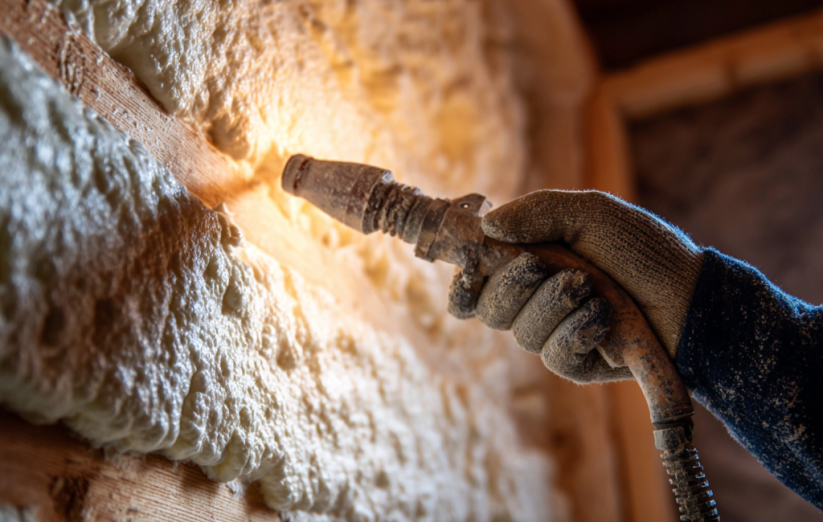
- Spray foam: This is the premium option. Open-cell spray foam is excellent at filling irregular spaces and providing an air seal along with insulation. Closed-cell spray foam adds a vapor barrier to the equation, which is a significant advantage in humid climates like ours. It costs more upfront but tends to pay for itself over time.
- Rigid foam board: Often used in combination with other insulation types. Good at reducing thermal bridging through rafters and framing. Useful in specific applications where space is limited.
According to the U.S. Department of Energy, homes in North Carolina’s climate zone should aim for R-38 to R-60 insulation in attic spaces. If your current insulation falls short of that range, you’re likely losing energy — and money — every single day.
Which Type of Insulation Works Best for North Carolina’s Climate?
The honest answer is: it depends on your home — but closed-cell spray foam is hard to beat here.
In a climate like Asheboro’s, moisture management is just as important as thermal performance. A lot of insulation types handle heat reasonably well but struggle when humidity enters the picture. That’s where closed-cell spray foam pulls ahead.
Because it creates both an air barrier and a vapor barrier, it keeps warm, humid summer air from infiltrating your attic and condensing on cooler surfaces. That matters a lot in a region where summer humidity regularly pushes past 80 percent. Unchecked moisture in your attic leads to mold, wood rot, and sheathing damage — problems that go well beyond comfort and start costing serious money.
That said, spray foam isn’t always the right fit for every budget or every application. For many homeowners, a combination approach — blown-in insulation over existing batts, or rigid foam board paired with blown-in — can strike the right balance between performance and cost. Getting a professional eye on your specific situation is the only reliable way to know what makes sense for your home.
The team at Red Wolf Roofing has worked on homes across the Sandhills and central Carolina region for years. They know what the local climate demands and can give you straightforward guidance without the upsell pressure.
How Do You Know If Your Current Insulation Is Actually Doing Its Job?
There are a few telling signs — and some of them show up in places you’d least expect.
You don’t need to climb into your attic to notice the early warning signs of inadequate insulation. Some of the most common signals show up in your day-to-day experience of your home:
- Rooms that feel stuffy, overheated, or drafty regardless of what your thermostat says
- Energy bills that seem higher than they should be, especially in summer
- Ice dams forming along your eaves in winter (a classic sign of heat escaping through your roof)
- Visible moisture, staining, or musty smells in your attic or on upper-floor ceilings
If any of those sound familiar, your insulation may be old, damaged, or simply undersized for the job. The Environmental Protection Agency’s ENERGY STAR program estimates that homeowners can save an average of 15 percent on heating and cooling costs by properly air sealing and insulating — that’s real money adding up month after month.
If you suspect your insulation isn’t up to the task, a roof inspection from Red Wolf Roofing is a logical first step. They can assess not just your shingles and decking, but the full picture of what’s happening in your attic.
Still Have Questions? Here’s What Homeowners Ask Most.
“Can I just add more insulation on top of what I already have?”
Often, yes — adding blown-in insulation on top of existing batts is a common and cost-effective upgrade. The key is making sure the existing insulation isn’t wet or moldy first. Installing over damaged insulation traps the problem rather than solving it.
“How long does roof insulation actually last?”
Most insulation materials last 20 to 30 years under normal conditions, but performance can degrade sooner if moisture gets involved. If your home is more than 15 years old and hasn’t had an insulation assessment, it’s worth a look.
“Does better insulation actually extend my roof’s life?”
It does. Proper insulation reduces the thermal cycling and moisture stress that wear down roofing materials over time. A well-insulated attic keeps temperature extremes from beating up your sheathing and shingles from the inside.
The Right Roof Starts from the Inside Out
Your roof does a hard job in a demanding climate. Giving it the right insulation underneath is one of the smartest ways to protect everything it’s protecting — your family, your belongings, and your investment in your home.
Red Wolf Roofing proudly serves homeowners across Aberdeen, Cumberland County, Fayetteville, Harnett County, Hoke County, Hope Mills, Lee County, Moore County, Pinehurst, Raeford, Sanford, Seven Lakes, Southern Pines, West End, and Whispering Pines. We bring the same honest, quality-first approach to every home we work on — and we’d love to bring it to yours.
Learn more about who we are, or take the first step today and schedule your free estimate with Red Wolf Roofing. No pressure. Just good work from people who stand behind it.